
The Sweet Legacy of India: A Journey Through the History of Indian Mithai

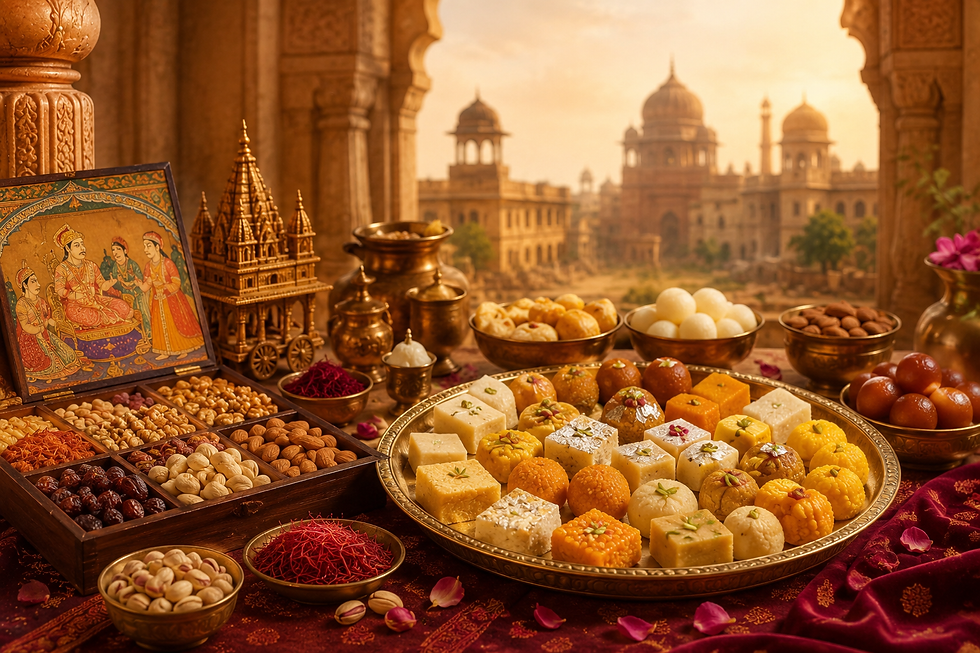
India’s love for sweets is far more than a culinary tradition—it is a reflection of culture, celebration, spirituality, and heritage passed down through centuries. From royal courts to festive gatherings, Indian mithai has always held a special place in the hearts of people across generations.
Origins Rooted in Ancient India
The history of Indian sweets dates back over 4,000 years to ancient civilizations like the Indus Valley. Early forms of sweets were made using jaggery, honey, rice, sesame, and milk. Ancient Ayurvedic texts even mention sweet preparations as a source of nourishment and energy.
Milk-based sweets gradually became an important part of Indian cuisine, especially with the growth of dairy farming. Ingredients like khoya, ghee, and curd became foundational elements in creating traditional mithai.
Influence of Royal Kitchens
Indian sweets evolved beautifully during the reign of various kingdoms and empires. The royal kitchens of Rajasthan, Bengal, Maharashtra, and Mughal India introduced luxurious techniques, premium dry fruits, saffron, and aromatic spices into mithai preparation.
The Mughal era particularly transformed Indian desserts by introducing richness and elegance. Sweets such as Gulab Jamun, Shahi Tukda, and various nut-based delicacies gained popularity during this time.
Meanwhile, regional specialties began flourishing:
Maharashtra became known for Modak and Puran Poli
Bengal perfected Rasgulla and Sandesh
Rajasthan introduced Ghewar and Mawa Kachori
South India became famous for Mysore Pak and Payasam
Every region created sweets that reflected its local culture, climate, and ingredients.
Sweets and Indian Celebrations
In India, sweets are deeply connected to emotions and traditions. No celebration feels complete without mithai. Whether it is Diwali, weddings, birthdays, festivals, or religious ceremonies, sweets symbolize prosperity, happiness, and togetherness.
Offering sweets is considered a gesture of goodwill and blessings. This emotional connection is one reason Indian mithai continues to remain timeless despite changing food trends.
The Rise of Artisanal Mithai
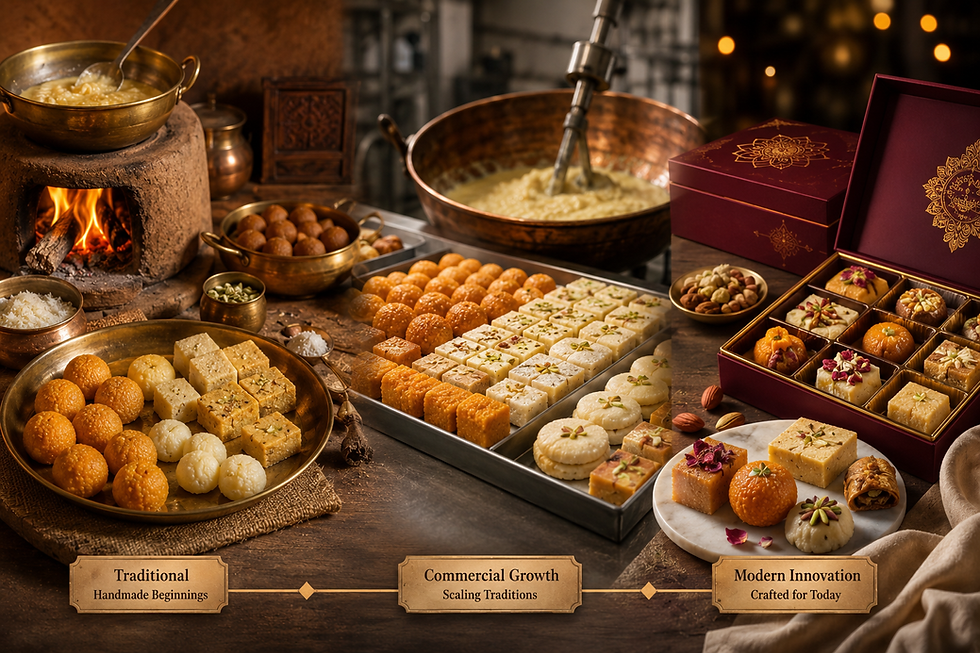
Over the years, Indian sweets have evolved from simple homemade treats to premium artisanal creations. Modern mithai brands now blend traditional recipes with luxury packaging, refined presentation, and innovative flavors while preserving authenticity.
Today, premium sweets are not only enjoyed in India but are also celebrated globally as a representation of Indian culture and craftsmanship.
Preserving Tradition in the Modern Era
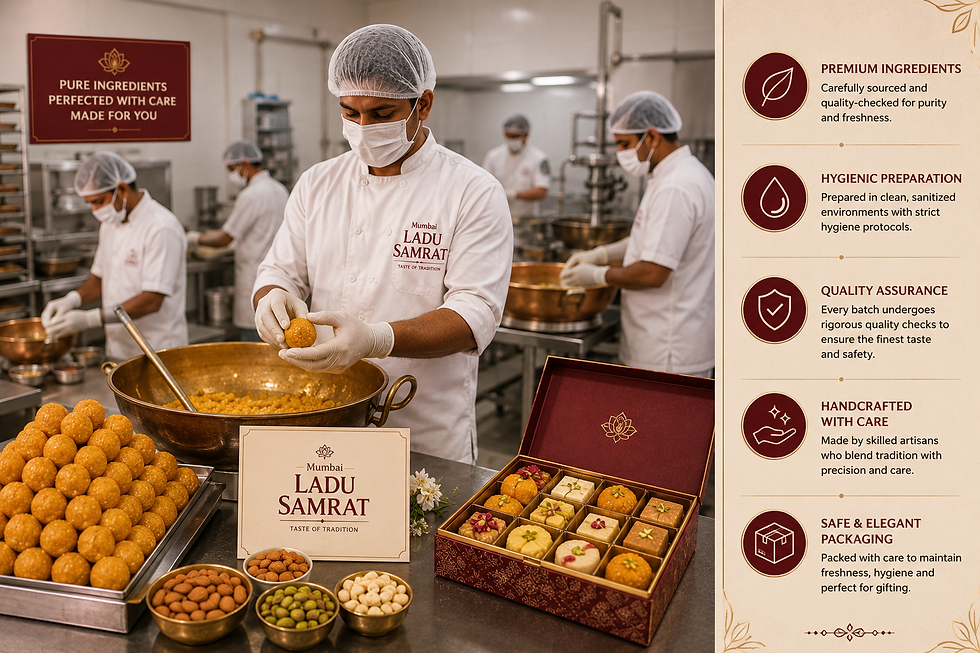
As lifestyles become faster and more modern, the value of authentic, handcrafted sweets has become even more important. Brands like Mumbai Ladu Samrat continue this rich legacy by honoring traditional recipes while maintaining premium quality and elegance.
Every laddu, barfi, and namkeen carries a story—of heritage, celebration, and the timeless sweetness that unites generations.
Conclusion
Indian sweets are more than desserts; they are a living tradition woven into the cultural fabric of the nation. From ancient temples and royal feasts to modern celebrations, mithai continues to represent joy, hospitality, and togetherness.
The story of Indian sweets is ultimately the story of India itself—diverse, rich, vibrant, and unforgettable.
Comments